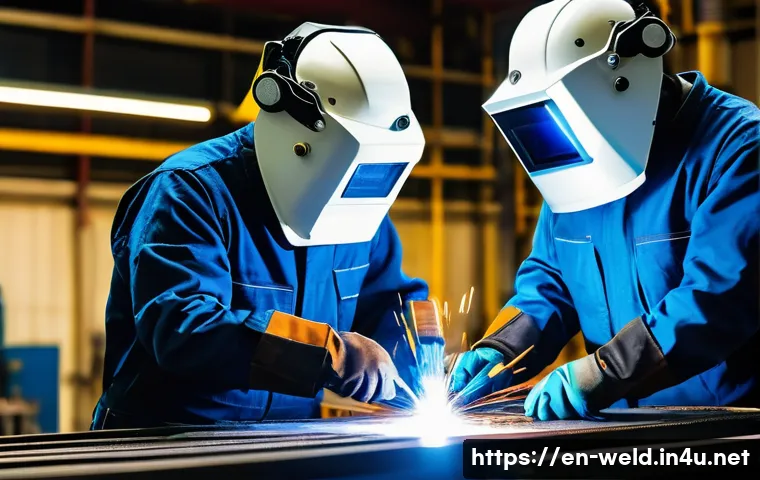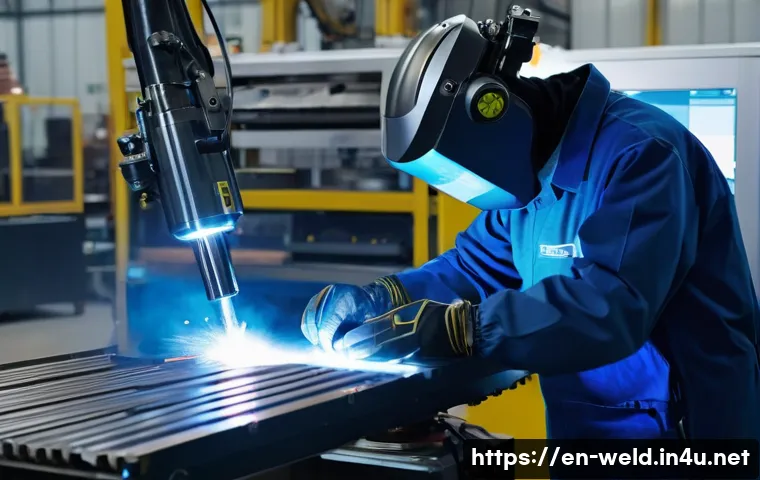
Hey there, fellow innovators and industry enthusiasts! It’s your favorite go-to influencer here, and today, we’re diving headfirst into a topic that’s literally reshaping our modern world, one strong bond at a time: the welding industry.
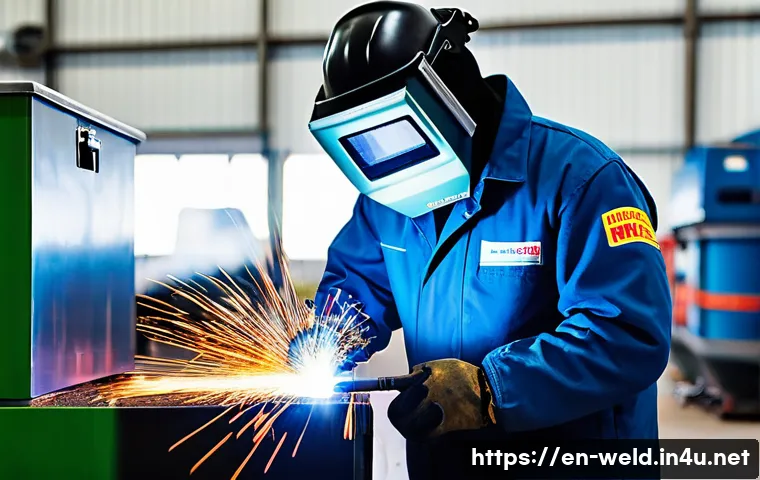
Now, you might think welding is just about sparks and metal, a traditional craft passed down through generations. And while that rich history is undeniable, let me tell you, what’s happening in this field right now is nothing short of revolutionary.
I’ve personally witnessed how fast things are evolving, from the incredible precision of robotic welders on factory floors to the innovative techniques being developed for materials we never thought possible to join.
It’s a dynamic landscape, buzzing with new technologies and game-changing methodologies that are pushing the boundaries of what we thought was achievable.
This isn’t just about building bridges or cars anymore; it’s about crafting the future of aerospace, sustainable energy, and even advanced medical devices.
The skilled hands and sharp minds in this sector are at the forefront of engineering marvels, constantly adapting to new challenges and embracing cutting-edge solutions.
It’s truly fascinating to see how innovation is transforming this foundational craft. We’re looking at a future where welding is more precise, more efficient, and incredibly intelligent, driven by advancements in AI and automation that were once just science fiction.
From what I’ve gathered talking to experts and seeing these technologies in action, the potential for impact across every major industry is simply staggering.
This evolution is also creating new opportunities for skilled professionals and demanding a fresh look at training and development to keep pace. So, if you’re curious about what’s next for this vital industry and want to understand how these shifts might impact everything from your next car to your career prospects, you’ve come to the right place.
Ready to cut through the noise and get the real scoop on where the welding industry is headed? We’re talking about advancements that will redefine manufacturing, infrastructure, and even space exploration.
Let’s peel back the layers and discover the incredible transformations shaping its future, right here, right now!
It’s incredible to see how far the welding industry has come, right? What was once a purely manual skill is now a high-tech field buzzing with innovation.
As someone who’s always got an eye on the pulse of industry changes, I can tell you, the future of welding isn’t just about making stronger connections; it’s about making smarter, safer, and more sustainable ones.
It’s truly an exciting time to be involved, whether you’re a seasoned pro, a newcomer, or just someone fascinated by how things are built. This evolution is reshaping everything, and it’s opening up a world of possibilities we could only dream of a few decades ago.
Robots Taking the Torch: The Rise of Automation
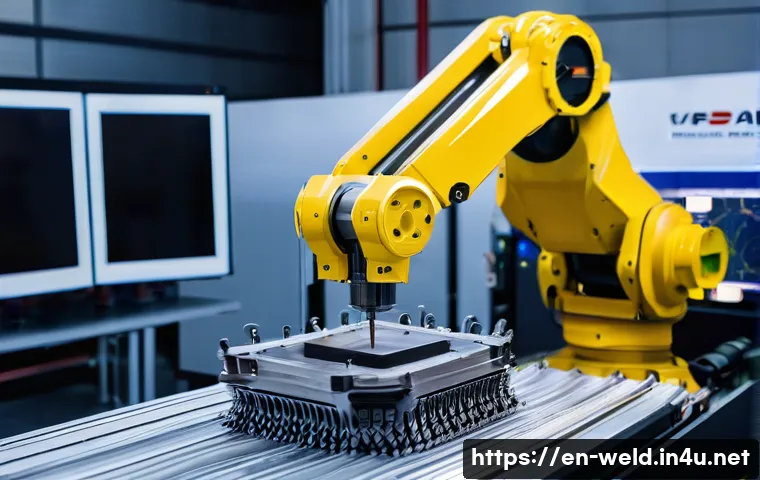
The sight of sparks flying from a robotic arm used to be something out of a sci-fi movie, but now, it’s a reality on factory floors worldwide, and it’s completely transforming the way we think about welding.
My own experience in visiting various manufacturing facilities has shown me just how much these automated welding systems are increasing productivity and precision.
They’re particularly brilliant at handling those super repetitive, often complex tasks that can lead to human fatigue and potential errors. Robots don’t get tired, they don’t lose focus, and they can crank out consistent, high-quality welds at speeds that manual welding simply can’t match.
This isn’t just about faster production; it’s about minimizing defects and ensuring a level of uniformity that was once incredibly difficult to achieve.
The beauty of it is, these aren’t just ‘dumb’ robots; we’re talking about advanced systems that can adapt to different manufacturing demands, offering flexibility that’s truly a game-changer for businesses looking to stay competitive in a dynamic global market.
It means more consistent output and a serious boost to overall operational efficiency.
Collaborative Robots (Cobots) and AI Integration
What’s even cooler is the emergence of collaborative robots, or ‘cobots,’ which are designed to work *alongside* human welders, not replace them entirely.
I’ve seen firsthand how these cobots can take on the more monotonous or dangerous parts of a welding job, freeing up human professionals to tackle the intricate, creative, and problem-solving aspects that still require that human touch.
Think of it like a smart assistant who handles the grunt work. Furthermore, the integration of Artificial Intelligence (AI) and machine learning into these robotic systems is revolutionary.
AI-driven systems can monitor welding parameters in real time, analyze massive datasets, and even predict issues before they happen, making adjustments to variables like gas flow, speed, and heat control on the fly.
This level of ‘smart’ decision-making significantly improves weld quality and drastically reduces defects. It’s essentially teaching robots to learn from expert welders, mimicking their techniques and adapting to new applications, which is just mind-blowing.
Advanced Welding Processes: Beyond the Arc
Beyond the classic arc, a whole new world of advanced welding techniques is gaining traction, each offering unique benefits for specialized applications.
Take laser welding, for example. I’ve witnessed its incredible precision and speed, particularly in high-stakes industries like automotive and aerospace where even the slightest imperfection isn’t an option.
This technology uses a focused laser beam to melt and join materials, providing incredibly clean welds with minimal heat distortion. Then there’s Friction Stir Welding (FSW), a solid-state joining process that’s becoming a superstar for welding aluminum and other non-ferrous metals without melting them.
It’s truly impressive how FSW produces high-strength welds with minimal defects, making it ideal for transportation sectors. And let’s not forget hybrid welding processes, which combine two or more techniques, like laser and traditional arc welding, to leverage the strengths of each while mitigating their drawbacks.
The ability to join thick plates in a single pass with reduced heat-affected zones is a testament to this innovation.
Materials Reinvented: Welding the Unweldable
Remember when certain materials felt impossible to weld together? Well, those days are quickly becoming a distant memory. The industry is constantly pushing the boundaries of what’s possible, especially with the growing demand for lightweight and high-performance components in sectors like electric vehicles (EVs), aerospace, and advanced manufacturing.
This means we’re dealing with a far wider array of materials than ever before, including advanced high-strength steels, aluminum alloys, titanium, and even composites.
From what I’ve observed, successfully joining these dissimilar materials is one of the biggest challenges, as they each have unique physical properties, metallurgical attributes, and thermal expansion coefficients.
It’s like trying to get two completely different personalities to work together harmoniously, but with science!
Innovations for Dissimilar Material Joining
The innovation here is truly breathtaking. New welding methods are specifically designed to tackle the complexities of dissimilar materials, focusing on precise control of heat input, cooling rates, and interpass temperatures to prevent issues like warping, cracking, and porosity.
Techniques like laser-arc hybrid processes are proving incredibly effective for joining things like galvanized steel and aluminum, where the arc fills the weld and the pulse laser precisely removes the zinc coating.
My experience has taught me that meticulous planning and execution are paramount, and the industry is responding with sophisticated techniques that aim to reduce heat-affected zones and minimize intermetallic compound formation.
It’s all about crafting strong, reliable connections that maintain the integrity and durability of these cutting-edge materials, which is crucial for things like electric vehicle bodies and aerospace structures.
The Role of New Filler Materials
It’s not just the processes; the materials we use *to weld* are also evolving rapidly. I’ve been hearing a lot about advanced filler materials that are significantly enhancing weld quality.
These new fillers are designed to offer improved strength, superior corrosion resistance, and are meticulously tailored to meet specific industry needs.
For instance, in applications where lightweight materials like aluminum are critical, specialized consumables and techniques are becoming essential. The development of low-fume welding wires and environmentally friendly materials is also gaining momentum, driven by both performance requirements and a growing emphasis on sustainability.
It’s all part of a holistic approach to ensuring the final product isn’t just strong, but also optimized for its intended purpose and produced with an eye toward environmental responsibility.
Green Welding: Crafting a Sustainable Future
It’s no secret that industries globally are shifting towards more sustainable practices, and the welding sector is absolutely on board, which is fantastic to see!
My travels have shown me a growing commitment to “green welding,” which basically means finding ways to reduce waste, limit emissions, and use energy more efficiently without compromising quality or safety.
This isn’t just a trend; it’s becoming a necessity. From what I’ve gathered, companies are actively investing in energy-efficient equipment, exploring cleaner technologies, and even adopting renewable energy sources like solar or wind power to operate their machinery.
This push for sustainability isn’t just good for the planet; it’s also making operations more efficient and often more profitable in the long run.
Eco-Friendly Equipment and Consumables
One of the most impactful changes I’ve witnessed is the move towards energy-efficient welding equipment. Modern inverter-based welding machines, for instance, can slash energy consumption by up to 30-40% compared to older transformer models, which is a huge win for both the environment and operating costs.
Beyond the machines themselves, there’s a growing emphasis on using recyclable and environmentally friendly consumables. We’re seeing a rise in biodegradable fluxes and welding wires that produce fewer harmful fumes and leave behind minimal hazardous residues.
My personal take is that this not only makes the workplace safer by improving air quality but also reduces the overall ecological footprint of welding activities.
It’s about being mindful of every step in the process.
Reducing Emissions and Waste
Effective fume extraction systems are no longer just a regulatory requirement; they are a cornerstone of sustainable welding. Investing in advanced local exhaust ventilation (LEV) systems and eco-friendly filters ensures that harmful emissions are captured at the source, significantly reducing airborne contaminants.
I’ve also observed innovative techniques like friction welding and cold metal transfer (CMT) gaining popularity because they operate with lower heat input, which minimizes spatter and reduces energy consumption, leading to less material waste and a smaller carbon footprint.
The industry is also getting smarter about material utilization, with advanced nesting software maximizing sheet usage and robust scrap collection and recycling programs ensuring leftover materials find a new life.
It’s a comprehensive effort to simply “do less, do it right, and keep things working longer.”
The Evolving Workforce: Skills for a Smart Future
Alright, let’s talk about the people behind the sparks! The welding industry is in a fascinating phase where traditional craftsmanship is meeting cutting-edge technology, and that means the skills needed for success are also evolving.
My discussions with industry leaders and educators consistently highlight the growing demand for a workforce that’s not only proficient in classic welding techniques but also adept with digital tools, automation, and advanced materials.
We’re seeing an urgent need for skilled professionals, especially as many experienced welders are heading into retirement. This creates a fantastic opportunity for new talent to jump into a field that’s both stable and expanding, with projections showing a significant demand for new welding professionals annually.
Training for Tomorrow’s Welder
The way we train welders is rapidly transforming to keep pace. Gone are the days when it was solely about brute strength and purely hands-on experience – though those are still absolutely vital!
Now, modern training programs are integrating technologies like Virtual Reality (VR) and Augmented Reality (AR) simulators. I’ve personally seen how these tools can create incredibly realistic training scenarios, allowing students to practice complex welding skills and even handle dangerous situations in a safe, controlled environment without consuming costly materials.
It’s a game-changer for speeding up the learning curve and preparing welders for diverse real-world challenges. Imagine practicing a tricky aerospace weld repeatedly in VR before even touching a piece of metal!
This layered approach, combining theory, simulation, and supervised hands-on work, is truly revolutionizing skill development and ensuring that new welders are “future-ready” from day one.
Beyond the Torch: New Roles and Opportunities
With the rise of automation and smart technologies, the role of a welder is expanding beyond just joining metal. While robots handle repetitive tasks, human welders are increasingly focusing on intricate welds, quality control, programming automated systems, and solving complex joining problems.
This means there’s a growing need for skills in data analytics for welding, understanding predictive maintenance for equipment, and even working with advanced software for weld path planning.
I’m convinced that this evolution isn’t diminishing the need for skilled welders; it’s elevating the profession and creating exciting new career paths in areas like welding inspection, automation programming, and specialized fabrication.
The industry is actively seeking individuals who can adapt to these shifts, making it an incredibly dynamic and rewarding field to be in right now.
Safety First: Innovations Protecting the Workforce
When we talk about the future of welding, we absolutely *have* to talk about safety. This industry has traditionally carried inherent risks due to high heat, intense light, and hazardous fumes, but it’s inspiring to see how much innovation is pouring into protecting the incredible individuals who make it all happen.
My personal observations and conversations with professionals confirm that worker protection is paramount, and new technologies are making welding environments safer and healthier than ever before.
This isn’t just about compliance; it’s about fostering a culture where welders can perform their crucial work with peace of mind, knowing they are truly safeguarded.
Cutting-Edge Personal Protective Equipment (PPE)
The advancements in Personal Protective Equipment (PPE) are truly impressive. Modern welding helmets, for example, now feature auto-darkening technology that automatically adjusts the lens shade in response to the arc’s intensity.
This not only protects eyesight from harmful rays but also significantly improves visibility, reducing the risk of accidents. I’ve also seen incredible progress in protective clothing.
Innovations in fabric technology have led to lightweight, highly durable, flame-resistant materials that offer enhanced protection against heat and splatter without compromising comfort.
Ergonomic designs in gloves and boots also provide better dexterity and support, which I believe is crucial for precision and reducing physical strain during long shifts.
And let’s not forget advanced respirators that significantly reduce exposure to toxic fumes, which is a huge step forward for long-term health.
Smart Systems and Environmental Controls
Beyond individual gear, smart systems are revolutionizing overall workshop safety. Automated welding machines are now handling repetitive and hazardous tasks, dramatically reducing direct human exposure to dangerous elements.
I’ve also seen how sophisticated local exhaust ventilation (LEV) systems and real-time air quality monitoring are becoming standard, effectively capturing fumes at their source and ensuring cleaner breathing environments.
It’s about creating an intelligent ecosystem where technology actively works to mitigate risks. These advancements aren’t just about preventing immediate physical harm; they are significantly reducing long-term health risks associated with welding activities, which, to me, is one of the most important transformations happening in the industry.
Additive Manufacturing: 3D Printing the Future of Welds
If you thought welding was just about joining two pieces of metal, get ready for a mind-bending twist: additive manufacturing, or 3D metal printing, is fundamentally changing how we create and repair metal components.
This technology is essentially building objects layer by layer, fusing metal feedstock with incredible precision. And guess what? Much of this process is deeply intertwined with welding principles!
From my perspective, it’s not just an alternative; it’s a powerful complement that’s unlocking design freedoms and material efficiencies we could only dream of before.
It’s truly thrilling to witness how this innovative approach is transforming industries from aerospace to medicine.
Wire Arc Additive Manufacturing (WAAM)
One of the most exciting developments I’ve been following is Wire Arc Additive Manufacturing (WAAM). This ingenious process combines Gas Metal Arc Welding (GMAW) with additive manufacturing to print metal parts by depositing layers of metal wire to form a 3D shape.
I’ve observed that WAAM is especially revolutionary because it largely eliminates the need for manual cutting and shaping, opening the door to incredibly complex geometries and designs that were previously too difficult or costly to achieve with traditional methods.
It’s like having a robotic artist meticulously building your part from the ground up, bead by bead, using welding techniques. This focus on “tool-less manufacturing” also means faster production times and significant cost savings, particularly for one-off projects or small-batch custom components.
Benefits and Applications
The advantages of integrating additive manufacturing into the welding world are profound. For one, it optimizes material usage, drastically minimizing waste and errors compared to traditional processes.
I’ve seen companies use it for rapid prototyping, allowing them to test designs for fit and performance before committing to a full-scale fabrication.
This not only saves time and resources but also sparks creativity in design. Beyond prototyping, WAAM is proving invaluable for creating large, complex components from expensive materials, allowing for significant material savings.
It’s also a game-changer for producing custom spare parts on demand, reducing the need for extensive inventory. Whether it’s structural implants for medical use or specialized parts for aerospace, additive manufacturing, built on welding expertise, is literally building the new.
Digital Integration: The Connected Welding Workshop
Stepping into a modern welding workshop today is like entering a whole new world, far removed from the dusty, analogue environments of the past. The digital revolution has truly swept through the industry, integrating cutting-edge technologies and connectivity that are fundamentally reshaping how welding operations are managed and executed.
As someone deeply invested in observing these transformations, I can tell you that this shift towards digitalization and the Internet of Things (IoT) isn’t just about making things fancier; it’s about making them smarter, more efficient, and incredibly precise.
We’re moving towards an era where every spark, every weld, and every piece of equipment is part of a larger, interconnected system that talks to us.
Real-Time Monitoring and Data Analytics
One of the most exciting aspects of this digital integration is the ability to have real-time monitoring and data analytics at our fingertips. Smart welding systems, equipped with an array of sensors, can collect and analyze data about every single welding parameter—from temperature and voltage to wire feed speed and gas flow.
I’ve witnessed how this allows welders and supervisors to optimize welding parameters on the fly, ensuring consistent quality and drastically reducing waste.
This isn’t just about fixing problems after they occur; it’s about predicting them before they even start. Imagine getting instant feedback that helps you identify potential defects and make immediate adjustments, ensuring that every weld is as perfect as it can be.
This data-driven approach is a game-changer for quality control and operational optimization, making the entire process more transparent and controllable.
Predictive Maintenance and Digital Workflows
The benefits extend beyond the weld itself. With AI and machine learning analyzing equipment performance data, predictive maintenance is no longer a futuristic concept—it’s here now.
These systems can anticipate potential equipment failures before they happen, allowing for proactive maintenance that minimizes downtime and extends the lifespan of welding machines.
For anyone running a business, this means significant cost savings and uninterrupted productivity. Furthermore, digital management platforms are streamlining workflows, from initial design and path planning to final quality checks.
This seamless integration improves communication across teams, enhances efficiency, and ensures that everyone is working with the most up-to-date information.
It’s about creating a truly connected workshop where every element works in harmony, driven by intelligent data.
Market Growth and Unlocking New Opportunities
It’s truly exciting to see the welding industry not just adapting, but thriving and growing, opening up a wealth of opportunities across the board. From what I’ve been tracking, the global welding industry is on a steady upward trajectory, with significant market expansion projected for the coming years.
This isn’t just random growth; it’s fueled by a combination of increasing demands from major sectors and the continuous advancements in technology that we’ve been discussing.
It’s a powerful testament to the indispensable role welding plays in our modern world, and it paints a very bright picture for anyone involved, or looking to get involved, in this dynamic field.
Driving Factors: Infrastructure, Manufacturing, and Beyond
So, what’s really pushing this growth? A huge factor is the rising demand from infrastructure development—think massive projects like bridges, highways, and energy pipelines that literally hold our societies together.
Governments and private sectors are investing heavily, and guess what? Welding is the backbone of all that construction. Beyond infrastructure, the expansion of key manufacturing industries like automotive, aerospace, and shipbuilding is a major driver.
These sectors are constantly innovating, demanding more precise and efficient welding solutions for new designs and lightweight materials. I’ve also noted the increasing industrialization in emerging economies, which naturally boosts the demand for welding across various applications.
Plus, there’s always a need for repair and maintenance welding in heavy industries, ensuring existing structures and equipment remain functional and safe.
It’s a truly diverse set of drivers, creating a robust and resilient market.
A Welder’s Market: Career Prospects
For those considering a career in welding, or for businesses looking to strengthen their workforce, the outlook is incredibly promising. My sources consistently point to a strong job market, with an urgent demand for skilled welders.
We’re facing an aging workforce, with many experienced welders reaching retirement age, which means there’s a real need for new talent to step in. The American Welding Society projects a substantial number of welding jobs needing to be filled annually in the coming years, creating a fantastic “welder’s market.” This means not just job security, but also competitive salaries and ample opportunities for career advancement, especially for those who embrace new technologies and specialize in high-demand areas.
It’s a field where your skills are truly valued and sought after, right from the get-go.
| Key Welding Advancement | Impact on Industry | Benefits |
|---|---|---|
| Automation & Robotics | Increased production speed and consistency; reduced human error. | Higher efficiency, improved weld quality, enhanced safety in hazardous environments. |
| AI & Machine Learning | Real-time parameter adjustment, predictive analytics for defects. | Smarter decision-making, reduced defects, optimized weld paths, predictive maintenance. |
| Advanced Materials Welding | Ability to join dissimilar and high-strength lightweight materials. | Lighter, stronger products (e.g., EVs, aerospace), expanded design possibilities. |
| Sustainable Practices | Shift to eco-friendly equipment, consumables, and energy sources. | Reduced environmental footprint, lower operating costs, improved worker health. |
| Additive Manufacturing (3D Printing) | Layer-by-layer metal creation, complex geometries, on-demand parts. | Optimized material usage, reduced waste, faster prototyping, custom component fabrication. |
| Digital Monitoring & IoT | Real-time data collection, remote oversight of welding operations. | Improved quality control, early defect detection, streamlined workflows. |
글을 마치며
Wow, what a journey we’ve just taken through the incredible evolution of welding! It’s truly mind-blowing to see how this fundamental craft is transforming into a high-tech, dynamic industry. From the sparks of innovation with robots and AI to the crucial push for sustainability and advanced materials, the future of welding isn’t just bright—it’s electrifying. I genuinely hope you’ve found this deep dive as fascinating as I have, and that it inspires you to look at every weld, every connection, with a fresh, appreciative eye. It’s a field brimming with possibilities, and for anyone involved, or looking to get involved, the horizon is wide open!
알아두면 쓸모 있는 정보
1. Continuous Learning is Your Superpower: In this rapidly evolving landscape, resting on your laurels simply isn’t an option. I’ve found that regularly checking out industry publications, online courses, and webinars from organizations like the American Welding Society (AWS) or local trade schools is absolutely essential. Staying updated on new techniques, materials, and safety protocols not only keeps your skills sharp but also opens doors to advanced roles and better opportunities. Think of it as constantly upgrading your internal software – it’s a game-changer for career longevity and success, ensuring you’re always ahead of the curve. You’d be surprised how much value a company places on an employee who actively seeks out new knowledge and adapts to change.
2. Network Like a Pro: Honestly, some of the best advice and opportunities I’ve stumbled upon have come from simply connecting with other professionals. Attending trade shows, local chapter meetings, or even engaging in online forums can be incredibly beneficial. You’ll meet mentors, potential collaborators, and fellow enthusiasts who share insights you might not find anywhere else. Remember, welding is a community, and building a strong network means you’re always in the loop, hear about job openings before they’re advertised, and gain a broader perspective on industry trends and challenges. It’s not just about who you know; it’s about what you learn from them.
3. Embrace Digital Dexterity: The modern welder isn’t just skilled with a torch; they’re increasingly adept with software and digital tools. Getting comfortable with CAD programs, welding simulation software, or even understanding basic data analytics for process monitoring can give you a massive edge. My own experience has shown me that companies are actively seeking individuals who can bridge the gap between traditional craftsmanship and digital innovation. Learning to interpret data from smart welding systems, or even program a cobot for a repetitive task, can elevate your role from purely operational to strategically invaluable. It’s an investment in your future that truly pays dividends.
4. Safety Never Takes a Backseat: Even with all the incredible technological advancements, safety remains the absolute bedrock of the welding industry. Always invest in and properly use the latest Personal Protective Equipment (PPE), from auto-darkening helmets to flame-resistant clothing and advanced respirators. Furthermore, stay vigilant about proper ventilation and fume extraction systems in your workspace. From my perspective, a strong safety culture isn’t just about avoiding accidents; it’s about respect for yourself, your colleagues, and the integrity of your work. It creates an environment where everyone can perform their best, knowing they are truly protected.
5. Consider a Niche Specialization: While general welding skills are always in demand, specializing in a high-growth area can truly differentiate you. Think about fields like additive manufacturing (3D metal printing), welding advanced lightweight alloys for aerospace or electric vehicles, or becoming an expert in robotic welding system programming and maintenance. These specialized areas often command higher wages and offer more complex, engaging challenges. I’ve found that focusing your expertise allows you to become an indispensable asset in specific industries, where your unique skills are not just valued, but absolutely critical to success and innovation.
중요 사항 정리
The welding industry is currently undergoing a profound transformation, moving rapidly from a traditional manual craft to a highly automated and intelligent field. Key advancements include the widespread adoption of robotics and AI, significantly boosting precision, productivity, and safety by handling repetitive tasks and offering real-time parameter adjustments. We’re also seeing groundbreaking progress in materials science, allowing for the successful joining of previously challenging dissimilar and advanced lightweight materials, crucial for sectors like electric vehicles and aerospace. A strong emphasis on green welding practices is driving the development of energy-efficient equipment and eco-friendly consumables, reducing environmental impact and improving worker health. Furthermore, the workforce itself is evolving, demanding new skills in digital literacy, automation programming, and data analysis, creating exciting new career paths and a robust job market for those willing to adapt and learn. Innovations in safety equipment and smart environmental controls are making welding environments safer than ever, while additive manufacturing (3D printing with metal) is revolutionizing how components are created and repaired, offering unparalleled design freedom and material efficiency. Finally, pervasive digital integration and the Internet of Things (IoT) are connecting workshops, enabling real-time monitoring, predictive maintenance, and streamlined workflows. All these factors underscore that welding is not just a trade, but a high-tech profession with immense growth potential and a pivotal role in shaping our future infrastructure and technologies. This dynamic shift means there’s never been a more exciting or opportune time to be part of the welding world.
Frequently Asked Questions (FAQ) 📖
Q: What are the absolute biggest technological advancements reshaping the welding industry right now?
A: Oh, this is such a fantastic question, and honestly, it’s where all the magic is happening! If you ask me, the top game-changers are undeniably the massive strides in automation and robotics, the incredible integration of AI and machine learning, and the continuous evolution of advanced welding processes.
I’ve personally seen how robotic welding systems, especially those clever collaborative robots or ‘cobots,’ are making factories so much smarter. They’re boosting productivity, nailing precision with millimeter-fraction accuracy, and even stepping into hazardous environments, which is a huge win for safety.
What truly excites me is how AI is weaving its way in. It’s not just about robots doing the heavy lifting; it’s about smart systems that can monitor welding in real-time, predict potential issues, and even adjust parameters like gas flow or travel speed on the fly.
This means fewer defects, higher consistency, and honestly, a whole new level of quality control that was once just a dream. Then there are the advanced techniques like laser welding, which offers incredible precision for delicate tasks, and friction stir welding (FSW), which can join materials like aluminum and high-strength steels that were notoriously tricky before.
And let’s not forget 3D printing, or additive manufacturing, which is actually revolutionizing how complex welding parts are even created in the first place, allowing for custom components with minimal waste.
It’s a dynamic and fast-moving landscape, and I’m here for every spark of innovation!
Q: With all these robots and
A: I, is there still a future for human welders, or are our jobs at risk? A2: This is a concern I hear a lot, and it’s totally understandable to wonder! But from what I’ve gathered talking to experts and seeing these technologies in action, it’s really more about evolution than elimination for human welders.
I truly believe our jobs aren’t at risk of disappearing entirely. Instead, the roles are shifting. Think about it: robots excel at repetitive, high-volume tasks that require incredible precision and consistency.
That frees up human welders from the mundane and often physically demanding or hazardous work. My conversations with industry pros suggest that there’s actually a growing demand for skilled welders who can program, monitor, and maintain these sophisticated AI-powered systems.
You’ll also find human welders focusing on more complex, intricate, or custom projects that require that human touch of creativity, problem-solving, and adaptability that robots just can’t replicate yet.
It’s about upskilling, learning to collaborate with these machines, and focusing on the higher-value aspects of the craft. The welding industry is investing heavily in training programs, including virtual and augmented reality simulations, to prepare the next generation of welders for this hybrid future.
So, if you’re a welder, think of AI and robotics as powerful tools that make your job safer, more efficient, and perhaps even more intellectually engaging!
Q: Beyond traditional manufacturing, what surprising new industries are now heavily relying on cutting-edge welding techniques?
A: This is where it gets really fascinating, and honestly, you wouldn’t believe how far-reaching the impact of advanced welding is becoming! While we’ve always associated welding with construction and automotive, it’s now absolutely critical in industries that are shaping our future.
For instance, the aerospace and aviation sectors are huge. When you think about crafting aircraft parts, intricate fuselage assemblies, or critical engine components, precision and reliability are paramount, and advanced welding techniques are making that possible, even with lightweight alloys like aluminum and titanium.
Then there’s the medical device manufacturing industry. It might sound surprising, but producing incredibly precise components for implants or delicate instruments demands welding techniques that ensure both structural integrity and biocompatibility.
This isn’t your grandpa’s welding anymore; it’s about microscopic, clean, and reliable joints! Renewable energy is another booming area. Building massive wind turbines, constructing solar energy systems, and even developing new energy storage solutions all rely heavily on specialized welding for durable and efficient structures.
Even advanced construction and infrastructure projects, like bridges and high-rise buildings, are leveraging innovative welding methods to join diverse and often novel materials seamlessly, ensuring long-term durability and safety.
It truly highlights how this foundational craft is adapting and driving innovation across almost every major industry you can imagine.