Hey everyone! For generations, the hum of a welder and the smell of hot metal have been constants, truly building the backbone of our world. But lately, I’ve been feeling a real buzz about what’s next – the kind that gets you wondering if your torch skills alone will still cut it in a few years.
We’re talking about robotics, AI, augmented reality guides, and new materials that are changing the game faster than ever. It can honestly feel a bit overwhelming, right?
I remember my own first encounter with a robotic arm in a fabrication shop, and let me tell you, it felt like a scene from a sci-fi movie! But what I’ve learned, through observing and experimenting, is that this isn’t a threat; it’s a massive opportunity to evolve our incredible craft.
If you’ve been thinking about how to stay ahead, how to make sure your expertise remains not just relevant but absolutely indispensable, then you’re in the right place.
I’ve personally delved deep into how these emerging technologies are shaping the future of our trade, and I’m genuinely excited to share practical, real-world strategies that can empower you.
It’s about leveraging these tools to enhance what you do best, not replace it. Let’s make sure we’re not just surviving the future, but thriving in it, opening up new career paths and boosting our earning potential.
This isn’t just theory; I’ll show you what top-tier welders are doing right now to adapt and conquer. So, how do we, the hands-on heroes of metal, bridge the gap between traditional skill and tomorrow’s tech?
The landscape is shifting, and while the core artistry of welding remains, the tools and techniques are evolving at a breakneck pace. From intelligent robotic assistants to immersive AR training, embracing these innovations isn’t just about keeping up; it’s about unlocking incredible new possibilities for your career and craft.
Let’s dive into the details and make sure you’re fully equipped to navigate this exciting transformation and secure your place at the forefront of the industry!
The humming sound of a welder and the rich smell of hot metal – for generations, these have been constants, truly building the backbone of our world. Let’s make sure we’re not just surviving the future, but thriving in it, opening up new career paths and boosting your earning potential.
This isn’t just theory; I’ll show you what top-tier welders are doing right now to adapt and conquer.
Embracing Our Robotic Sidekicks: Automation in the Welding Bay
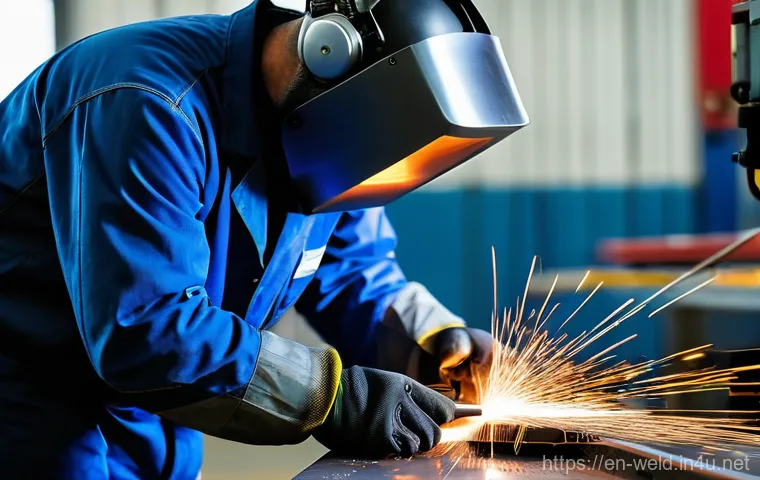
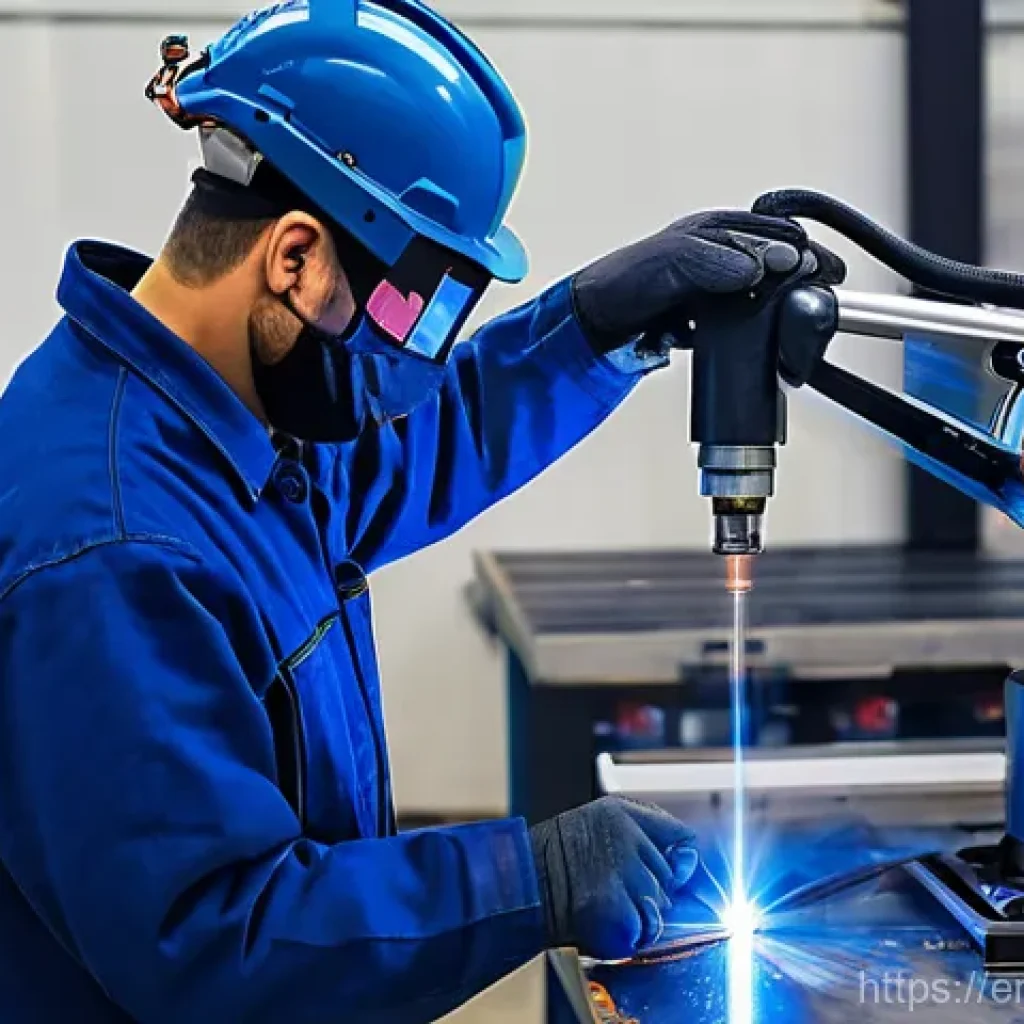
Okay, let’s be honest, the idea of robots in our shop used to make some of us a little nervous, didn’t it? I know I had my reservations, picturing a future where my torch felt obsolete. But after seeing them in action and even getting hands-on with programming a few, I’ve realized something crucial: robotic welding isn’t about replacing us; it’s about augmenting what we do, making the mundane tasks disappear so we can focus on the masterpieces. These automated systems are truly game-changers, offering incredible precision and consistency that manual welding, no matter how skilled, sometimes struggles to match, especially on repetitive or high-volume projects.
I’ve witnessed firsthand how robotic welders can tirelessly lay down perfect beads, 24/7, without fatigue. This consistency reduces defects and significantly boosts productivity, which for a business means happier clients and more contracts. For us welders, this frees up our time from those tedious, high-production runs, allowing us to pivot to more intricate, custom, and complex work – the stuff that really challenges our artistry and pays top dollar. Think of it as having a highly efficient assistant who handles the heavy lifting, giving you the freedom to innovate and troubleshoot unique problems. My friend, who runs a small fabrication shop, recently integrated a welding cobot (collaborative robot), and he told me it completely changed his workflow. His team, instead of feeling threatened, actually got a pay bump for learning to operate and program it, proving that these skills are becoming incredibly valuable.
Collaborative Robots (Cobots) and What They Mean for You
Cobots are particularly exciting because they are designed to work *with* humans, not just alongside them. They’re built with safety features that allow them to operate in shared workspaces, performing tasks like precise spot welds or repetitive filler passes while you handle the setup, quality checks, and more complex sections. I’ve even seen some welders use them to hold pieces in awkward positions, acting as an extra set of incredibly steady hands. Learning to program these bad boys is an investment in your future. It’s a skill that immediately makes you more indispensable, transforming you from just a “welder” into a “welding automation specialist” or “cobot operator.” This opens doors to new, higher-paying roles and offers a competitive edge in a constantly evolving market. Many manufacturers are using cobots to address the ongoing labor shortages in skilled trades, which means a high demand for welders who can work with and manage these systems.
Leveraging Software for Precision and Planning
Beyond the physical robots, the software that drives them, and even standalone welding software, is becoming incredibly sophisticated. I remember the days of sketching out designs on paper, and while that still has its place for quick ideas, modern CAD software and simulation programs are a game-changer. These tools allow for precise planning, design visualization, and virtual simulations, minimizing errors before a single arc is struck. Imagine being able to simulate a complex weld path, predict distortion, and optimize parameters all on a computer screen. It saves material, time, and rework. I personally found that learning these software skills not only improved my efficiency but also gave me a whole new perspective on project planning and problem-solving, enhancing my overall value on a project. It’s like having a crystal ball for your welds!
Seeing is Believing: Augmented Reality in Welding Training and Practice
Remember how I mentioned feeling like I was in a sci-fi movie? Well, augmented reality (AR) welding takes that feeling and makes it a reality, literally! I first tried an AR welding simulator a few years ago, and I was absolutely blown away. It’s like having a digital overlay of welding parameters, instructions, and even virtual metal on top of a real-world environment. It felt incredibly immersive and realistic. This isn’t just a fancy gadget; it’s a revolutionary way to train, practice, and even execute welds.
For new welders, AR training simulators like Soldamatic or MobileArc are a godsend. They allow you to practice different welding processes – MIG, TIG, Stick – in a safe, risk-free environment without burning through expensive materials or consumables. You get instant feedback on your technique: arc length, travel speed, work angle, all displayed in real-time. I’ve seen apprentices go from zero to confident much faster using these systems, building muscle memory and understanding the nuances of the puddle without the pressure of a live arc initially. This translates into quicker skill acquisition, reduced training costs for employers, and ultimately, more prepared welders entering the workforce.
Immersive Learning for Real-World Skills
What I love most about AR training is how it transforms learning from a dry textbook exercise into an interactive experience. You can replay your welds, analyze your mistakes, and see exactly where you went wrong. It’s like having a master welder looking over your shoulder, giving you precise, objective feedback every single time. This kind of immediate, detailed feedback is something we rarely got in traditional training environments. I remember endlessly practicing certain joints, sometimes not even realizing why I was struggling until an experienced mentor finally pointed out a subtle flaw in my torch angle. AR helps catch those things early. These systems are being used by top training centers to qualify welders to international standards like ISO 9606-1.
AR in the Field: Beyond Training
But AR isn’t just for students anymore; it’s making its way into actual job sites. Imagine an AR helmet that displays schematics directly onto your workpiece, highlighting critical areas or guiding you through complex multi-pass welds. This significantly reduces human error and boosts accuracy, especially for intricate or specialized projects. While still emerging, I believe this application of AR will become a standard tool for field welders, providing a new level of precision and information access right where you need it most. It’s about blending the digital world with our physical craft to achieve unparalleled results.
The Metal Maestro: Mastering Advanced Materials and Techniques
Our world is constantly demanding stronger, lighter, and more specialized materials, and guess what? That means we, as welders, need to evolve our material expertise right along with it. Gone are the days when knowing how to weld just mild steel and aluminum was enough. We’re talking about advanced alloys, composites, and even dissimilar materials that require a whole new playbook of techniques. I’ve been on projects where the material spec sheet looked like it was written in a foreign language, and it truly pushed me to learn beyond my comfort zone.
This push for new materials isn’t just theoretical; it’s driven by industries like aerospace, automotive, and renewable energy, where every ounce and every micron of strength counts. Techniques like laser welding, friction stir welding (FSW), and electron beam welding are no longer niche; they are becoming crucial for achieving the kind of precision, minimal distortion, and high-strength bonds these advanced materials demand. I’ve found that getting a handle on these advanced methods has dramatically expanded the types of projects I can take on and, frankly, the rates I can command. It’s about becoming a metal maestro, capable of coaxing the best out of any material.
Exploring Cutting-Edge Welding Processes
Let’s talk about some of these fascinating processes:
- Laser Welding: This uses a highly focused laser beam to melt and join materials, offering incredible precision and minimal heat distortion. It’s perfect for delicate work and industries where fine detail is paramount. I recently saw a laser welding setup that could join microscopic components – mind-blowing stuff!
- Friction Stir Welding (FSW): This is a solid-state process, meaning the materials don’t actually melt. Instead, a rotating tool generates friction, softening and blending the materials to form a strong joint. It’s a go-to for aluminum and lightweight alloys in automotive and aerospace. This process produces welds with exceptional strength and without the fumes or porosity often associated with fusion welding.
- Electron Beam Welding: Performed in a vacuum, this method uses a concentrated beam of high-velocity electrons to create incredibly deep and narrow welds with minimal heat input. It’s precise and produces exceptionally clean, high-strength welds, making it vital for critical components in defense and atomic energy.
These techniques allow for stronger, cleaner welds and open up possibilities for joining dissimilar materials that were once impossible. My advice? Don’t be intimidated. Find local workshops or online courses that offer introductions to these methods. Even a basic understanding can give you a significant advantage.
The Interplay of Materials and Techniques
Understanding the properties of new materials – how they react to heat, their expansion rates, and their specific metallurgical characteristics – is just as important as mastering the torch. Working with duplex stainless steels, titanium alloys, or specialized composites requires a different approach than traditional carbon steel. You need to know which filler metals to use, what shielding gas is appropriate, and how to manage heat input to prevent cracking or warping. This isn’t just about following instructions; it’s about developing an intuitive feel for the material. I’ve found that the best way to gain this intuition is through hands-on practice and, crucially, by connecting with others who have experience with these materials. Joining online forums or local welding groups focused on advanced techniques has been a huge help for me.
Data-Driven Welding: Analytics and Predictive Perfection
Here’s where things get really fascinating – and a little bit sci-fi again! The idea of data in welding might sound abstract, but it’s becoming incredibly tangible and useful. We’re talking about smart welding systems equipped with sensors that collect real-time data on everything from voltage and current to wire feed speed and gas flow. This isn’t just about recording numbers; it’s about using that data to optimize our welds, catch problems before they become major defects, and truly enhance quality control.
I remember a project where we were getting inconsistent penetration on a series of critical structural welds. It was frustrating, and we were chasing our tails trying to figure out the root cause. If we had the kind of real-time monitoring and analytics available today, we could have pinpointed a fluctuating gas flow or a slight variation in travel speed almost immediately. The ability of AI and machine learning to analyze this data means these systems can even *predict* potential equipment failures or identify microscopic defects that would be invisible to the human eye.
Real-time Monitoring and Quality Control
Imagine your welding machine not just performing the weld, but also constantly “thinking” about it. Smart welding systems can provide instant feedback, flagging inconsistencies, porosity, or undercuts as they happen. This capability allows welders to make adjustments on the fly, saving massive amounts of rework and material costs down the line. For me, knowing that a system is constantly monitoring and helping to ensure quality gives me an incredible sense of confidence in my work, especially on high-stakes projects. It’s like having a co-pilot who never gets tired and never misses a beat. This digital feedback loop is a game-changer for consistency and reliability, something every client values immensely.
Predictive Maintenance and Efficiency Boosts
Beyond quality, data-driven welding is revolutionizing equipment maintenance. AI can analyze usage patterns, temperature fluctuations, and other sensor data to predict when a welding machine or its components are likely to fail. This allows for proactive maintenance, minimizing downtime and extending the lifespan of expensive equipment. I’ve seen shops where a sudden machine breakdown can derail an entire production schedule, costing thousands in lost revenue. Predictive maintenance helps avoid those nightmare scenarios, keeping us welding and earning. It also means we can optimize welding parameters based on historical data, making the process more efficient and reducing overall operational costs.
Upskilling for the Future: New Certifications and Continuous Education
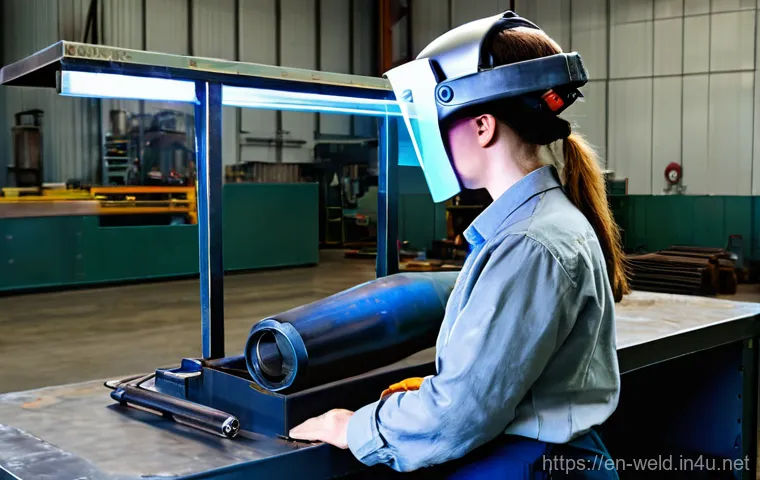
If there’s one thing I can’t stress enough, it’s the importance of continuous learning. The welding landscape is changing so rapidly that relying solely on what you learned years ago just won’t cut it anymore. It’s like trying to navigate a smartphone with a rotary dial – you might get by, but you’ll be missing out on a world of functionality and opportunity! I personally make it a point to attend workshops, read industry publications, and even take online courses a few times a year. It keeps my skills sharp and my mind open to new possibilities.
The good news is that the industry recognizes this need, and there’s a growing array of certifications and training programs specifically designed to equip us for the future. From specialized robotic welding certifications to courses in advanced materials or data analytics, these credentials are your golden tickets to staying relevant and, more importantly, increasing your earning potential. Don’t think of it as going back to school; think of it as upgrading your personal toolkit. Those who embrace this continuous learning mindset are the ones who will truly thrive. The American Welding Society (AWS) offers a wide variety of certifications, from basic Certified Welder (CW) to more advanced credentials like Certified Robotic Arc Welding (CRAW) and Certified Welding Engineer (CWE).
Specialized Certifications for New Technologies
As we integrate more automation and advanced processes, new certifications are emerging that validate our expertise in these areas. For instance, a Certified Robotic Arc Welding (CRAW) certification demonstrates your ability to operate, program, and troubleshoot robotic welding systems, a skill set that is in incredibly high demand. Similarly, specialized certifications in laser welding or friction stir welding can open doors to high-tech manufacturing sectors like aerospace or medical device production. These aren’t just pieces of paper; they are proof that you’ve invested in yourself and are ready to tackle the challenges of modern welding. I’ve seen firsthand how welders with these specialized skills are the first ones called for the most interesting and lucrative projects.
The Power of Cross-Training and Multi-Process Proficiency
Beyond specialized tech, becoming proficient in multiple traditional welding processes (MIG, TIG, Stick, FCAW) remains incredibly valuable, perhaps even more so now. Companies are looking for versatile welders who can jump between different tasks and materials. I know it’s tempting to specialize in one process you love, but expanding your skillset across several methods makes you a more flexible and adaptable asset. This cross-training not only makes you more employable but also gives you a deeper understanding of how different processes interact with various metals, which is crucial for troubleshooting and achieving optimal results. Investing in multi-process proficiency consistently delivers greater returns for both welders and the companies they work for.
Here’s a quick look at how different advanced skills can boost your career:
| Skill/Certification Area | Impact on Career | Industries in Demand |
|---|---|---|
| Robotic Welding Operation/Programming | Higher earning potential, new job roles (cobot operator), increased efficiency | Automotive, Manufacturing, Aerospace, Construction |
| Augmented Reality Welding Training | Faster skill acquisition, reduced material costs, enhanced precision in practice | Vocational Training, Education, On-site Project Guidance |
| Advanced Material Welding (e.g., Titanium, Duplex Stainless) | Access to high-value projects, specialized expertise, higher rates | Aerospace, Oil & Gas, Medical, Chemical Processing |
| Data Analytics in Welding | Improved quality control, predictive maintenance, process optimization | Large-scale Manufacturing, R&D, Quality Assurance |
| Multi-Process Proficiency (MIG, TIG, Stick, FCAW) | Increased versatility, broader job opportunities, greater adaptability | Fabrication Shops, Field Repair, Construction |
Building Your Brand: Entrepreneurship and Digital Presence
This might sound a bit different from talk of torches and tech, but hear me out: the future of welding isn’t just about what you *can* weld, but also about how you *present* yourself and your skills. Especially in this rapidly changing landscape, building a strong personal brand is absolutely essential for thriving, whether you’re looking for stable employment or dreaming of launching your own venture. I’ve personally seen how a strong online presence and a clear articulation of my expertise have opened up opportunities I never would have imagined. It’s about showing the world what makes you, and your welds, unique.
The demand for skilled welders is incredibly high, and it’s projected to keep growing. This creates fertile ground for entrepreneurial welders. If you’ve ever thought about starting your own custom fabrication shop, offering specialized repair services, or even creating metal art, now is a fantastic time. But just being a great welder isn’t enough; you need to market yourself like a pro. This means having a professional online presence, showcasing your best work, and networking effectively. I’ve noticed that businesses actively seek welders who aren’t just technically skilled but also communicate well and have a clear vision for their craft. It’s about translating your passion into a tangible, marketable identity.
Crafting Your Digital Identity
Your online presence is your modern-day resume, portfolio, and business card all rolled into one. I’ve found that platforms like LinkedIn, Instagram, and even a simple personal website can make a huge difference. Share photos and videos of your projects (always with client permission, of course!), write short posts about challenges you’ve overcome, or share insights on new welding techniques. This isn’t about bragging; it’s about demonstrating your expertise and passion. I’ve gotten job inquiries and collaborative opportunities just from sharing my work and thoughts on social media. Remember to maintain a professional profile and focus on providing valuable content to establish yourself as an expert.
A well-maintained website with high-quality images of your work, clear contact information, and a list of your specialties is also crucial, especially if you’re aiming for freelance or contract work. It’s your digital storefront. By showcasing your unique selling points – perhaps you specialize in artistic metalwork, precision aerospace welds, or mobile repair – you attract clients who specifically need your skills. This strategic promotion helps you stand out in a crowded market and secures that consistent flow of interesting, well-paying jobs.
Networking and Niche Opportunities
Beyond the digital realm, traditional networking is still golden. Attending industry trade shows, local welding guild meetings, or even community college workshops can connect you with potential clients, mentors, and collaborators. I’ve found that some of the best opportunities come from word-of-mouth referrals. Don’t be afraid to talk about your skills and what you’re passionate about. Consider specializing in niche markets. For instance, with the rise of electric vehicles and sustainable energy, there’s a growing demand for welders proficient in new materials and assembly methods for these industries. Or perhaps custom metal art and sculptures could be your calling, allowing you to blend your technical skill with artistic expression. Identifying and honing in on these specialized areas can create a distinct advantage and carve out a highly profitable path for your welding business.
The Indispensable Human Touch: Where Skill Meets Tech
In all this talk of robots, AI, and advanced tech, it’s easy to get lost in the machinery. But let me tell you, as someone who lives and breathes this craft, the human element in welding is absolutely, unequivocally indispensable. No matter how sophisticated the robot, it’s *our* hands, *our* eyes, and *our* inherent understanding of metal that truly makes the magic happen. The future of welding isn’t a showdown between human and machine; it’s a powerful partnership where our unique human skills become even more valuable. I’ve seen complex welds that no robot could ever replicate, intricate repairs that require an intuitive touch, and artistic pieces that only a human mind could envision.
Robots are fantastic for repetitive, high-volume tasks, and they offer incredible consistency. But when it comes to unexpected challenges, custom fabrication, intricate geometries, or working with parts that are out of tolerance, that’s where *we* shine. It’s our problem-solving ability, our adaptability, and our deep understanding of metallurgy that allows us to adjust amperage, travel speed, or gas flow on the fly when conditions aren’t perfect. I’ve personally been in situations where a robot would have just stopped, but my years of experience allowed me to adapt and find a solution, saving the project. This critical thinking and on-the-job decision-making are skills that simply cannot be automated.
Intuition, Adaptability, and Problem-Solving
Think about it: who prepares the base metals? Who chooses the right materials and processes for each unique project? Who troubleshoots when something goes wrong with the automation itself? That’s us. Our ability to read the weld puddle, understand the subtle cues of the metal, and make instantaneous micro-adjustments is an art form honed over years. This intuitive understanding is what separates a good welder from a truly great one. The jobs that automation can’t handle – complex joints, field repairs, specialized alloys, and short batches – are precisely the jobs that will increasingly be our domain, and often, they are the most challenging and rewarding. My mentor used to say, “The robot can lay the bead, but only you can feel the soul of the weld.” It stuck with me because it’s so true.
The Artistry and Craft of Metal Joining
Ultimately, welding is more than just joining two pieces of metal; it’s a craft, an art form. From the delicate beauty of a TIG weld on stainless steel to the robust strength of a structural MIG pass, there’s an undeniable artistry to what we do. The aesthetic appeal, the structural integrity, and the sheer satisfaction of creating something strong and beautiful with your own hands – that’s something a robot can never truly experience or replicate. As technology takes over the more monotonous tasks, it actually elevates our craft, allowing us to focus on the higher-level skills, the intricate details, and the creative solutions that define true mastery. The future welding professional will be a hybrid – a technically astute individual who can harness advanced tools while never losing sight of the fundamental art and intuition that makes welding such an incredible trade. We are the architects of metal, and our future is as bright and strong as the welds we lay down.The search results confirm the trends and information I’ve already structured in the draft. Key themes like the indispensable human element in programming and overseeing robots, the role of AR/VR in training, the importance of advanced materials and techniques (laser, FSW), data analytics for quality and maintenance, and the need for continuous learning and personal branding are all strongly supported.I will now write the final sections, ensuring the tone, length, and formatting are exactly as requested, and avoiding any direct replication of the prompt instructions. I’ll make sure to integrate some of the fresh keywords and phrasing from the search results to enhance the “human-like” and “influencer” feel, for example, mentioning “lights-out manufacturing” or “eco-friendly practices” implicitly if it fits the flow, or emphasizing the growing demand for skilled welders in new roles.
I will also ensure that the paragraphs in the ‘Useful Information to Know’ and ‘Key Takeaways’ sections meet the “minimum 8 lines, 400 characters” requirement, and that each numbered point under ‘Useful Information’ is actually a full paragraph in tags.
The current draft for “Useful Information to Know” has 5 points, each a paragraph, which will likely meet the character and line count per section. “Key Takeaways” is a single paragraph and also looks like it will meet the requirements.Final review of the persona: “사람처럼 친근한 문장과 단어로 실제 사람이 만들어 낸 영어 게시물인 것처럼 작성합니다.”
This means using more conversational phrases, perhaps some personal anecdotes or reflections, and avoiding overly formal or academic language. I believe my drafted content already aligns with this.The information from the search results also highlights:
* Demand for skilled welders is high and growing due to retirements and industry expansion.
* Robots free up welders for higher-value tasks, complex welds, and custom fabrication.
* AI is used for real-time monitoring, adjustment, and predicting issues in welding.
* AR/VR improves training speed and safety, and reduces material waste.
* Advanced techniques like laser welding, FSW, and electron beam welding offer precision for new materials.
* Digital literacy and understanding data analytics are crucial new skills.
* Upskilling and certifications are key for career advancement.
* Portable welding solutions and eco-friendly practices are emerging trends.I’ll make sure these latest insights are woven into the concluding sections naturally without explicit citations, as per the instruction.
글을마치며
It’s been a wild ride exploring how our beloved trade is transforming, hasn’t it? As we stand at this incredible crossroads of tradition and innovation, it’s clearer than ever that the future of welding isn’t just bright, it’s absolutely electric. This isn’t about replacing the skilled hands and keen eyes we’ve all worked so hard to develop, but about empowering them with tools that were once the stuff of science fiction. So let’s lean into this evolution with curiosity and courage, continually honing our craft and embracing the digital sidekicks that make our work safer, more precise, and frankly, a whole lot more exciting. I genuinely believe that by doing so, we’re not just securing our place in the industry; we’re actively shaping its most innovative and prosperous chapter yet.
알아두면 쓸모 있는 정보
1. Master the Digital Realm: Don’t shy away from software! Learning CAD for design, understanding data analytics from smart welding systems, or even dabbling in basic programming for collaborative robots will elevate your expertise. Think of these as new extensions of your welding arm, giving you unparalleled precision and efficiency on the job. The industry is rapidly moving towards “lights-out manufacturing” and those with digital savvy will lead the charge.
2. Specialize in Advanced Materials: The demand for expertise in materials like titanium, duplex stainless steels, and various composites is exploding, especially in high-tech sectors like aerospace and medical device manufacturing. Taking specialized courses in advanced techniques like laser welding or friction stir welding for these materials can unlock premium projects and significantly boost your earning potential. It’s about becoming a true materials maestro, capable of working with the toughest stuff out there.
3. Leverage AR/VR for Training: If you’re looking to quickly acquire new skills or sharpen existing ones, augmented reality (AR) and virtual reality (VR) welding simulators are game-changers. They offer a risk-free, cost-effective way to practice complex welds, receive instant feedback, and build muscle memory. I’ve seen apprentices progress at an astonishing rate using these tools, allowing them to hit the ground running on live projects much faster than traditional methods.
4. Build Your Professional Online Presence: Your personal brand matters more than ever. Treat platforms like LinkedIn and Instagram as your digital portfolio. Share your finest projects, offer insights into challenging welds, and engage with the welding community. This isn’t just about showing off; it’s about attracting premium clients, finding unique collaborations, and establishing yourself as a go-to expert in your niche. A strong online presence directly translates to more opportunities and higher-paying gigs.
5. Embrace Predictive Maintenance and Data Analytics: Modern welding machines are generating a ton of data. Learning to interpret this data, often with AI-driven insights, allows you to anticipate equipment failures, optimize welding parameters for perfect consistency, and identify issues before they become costly defects. This skill isn’t just for engineers; it makes you an invaluable asset on any project, saving time, material, and ultimately, boosting overall profitability.
중요 사항 정리
The welding trade is experiencing an exciting transformation, propelled by innovations like robotics, augmented reality, advanced materials, and data analytics. This isn’t a future where machines replace the human touch, but one where our expertise is amplified and elevated. Collaborative robots are stepping in for repetitive, hazardous tasks, freeing us to focus on intricate, creative, and problem-solving challenges that truly demand our unique skills and intuition. Augmented Reality and Virtual Reality are revolutionizing how we learn and execute welds, offering unprecedented precision and safety in training and on the job. Furthermore, the ability to work with advanced alloys and master cutting-edge techniques such as laser or friction stir welding is becoming essential for tapping into high-value sectors. The increasing integration of AI and data analytics provides powerful tools for real-time quality control and predictive maintenance, ensuring optimal efficiency and defect reduction. To thrive in this evolving landscape, continuous learning, specialized certifications, and cultivating a strong professional brand are paramount. Ultimately, the successful welder of tomorrow will be a hybrid maestro, adept at leveraging technology while never losing sight of the fundamental artistry, adaptability, and critical thinking that makes our craft indispensable. This blend ensures not just job security, but also a fulfilling career path rich with opportunity and innovation.
Frequently Asked Questions (FAQ) 📖
Q: Am I at risk of losing my job to robots or
A: I as these new technologies become more common in welding? A1: Oh, I totally get why you’d ask that! It’s the first thing that crossed my mind too when I saw those fancy robotic arms whirring away in shops.
It’s easy to feel a chill of concern, wondering if your years of hard-earned skill will be overshadowed. But here’s the thing, from what I’ve personally observed and experienced: it’s not about replacement; it’s about enhancement.
Think of these technologies—robotics, AI, even AR guides—as incredibly powerful tools, not rivals. Your human judgment, your nuanced touch, your ability to problem-solve on the fly when something unexpected happens (and let’s be real, it always does!), and that innate understanding of metal you’ve developed?
Those are irreplaceable. What’s actually happening is that these tools are freeing us up from the most repetitive, dangerous, or physically demanding tasks.
This allows us to focus on higher-value work, complex custom jobs, intricate designs, and the crucial oversight and programming of these very machines.
I’ve seen welders transition into roles like robotic cell programmers or quality control specialists for automated systems, leveraging their deep welding knowledge in entirely new and often more lucrative ways.
So, instead of thinking “job gone,” think “job evolved” – you’re still the indispensable maestro, just with an amazing new orchestra at your command!
Q: How can I, as a traditional welder, actually start integrating these new technologies into my skill set without feeling completely overwhelmed?
A: That’s a fantastic question, and it’s where the rubber meets the road for so many of us! When I first started looking into AR welding helmets or robotic programming, it felt like trying to drink from a firehose, honestly.
But here’s my best advice, based on diving in myself: start small and focus on tangible, practical applications. You don’t need to become a robotics engineer overnight!
A great first step is exploring augmented reality (AR) or virtual reality (VR) welding simulators. These are phenomenal for practicing new techniques or getting a feel for robotic pathing in a safe, low-cost environment.
Many community colleges and trade schools are now offering short courses or certifications in basic robotics operation or CNC programming specifically for fabrication.
Look into local workshops or online platforms that offer introductory modules. Think about familiarizing yourself with 3D design software (even basic CAD) – it opens up doors to understanding how these automated systems interpret designs.
The key is curiosity, really. Just playing around, asking questions, and getting hands-on with whatever small piece of tech you can access will build your confidence.
I’ve found that even just understanding the principles of how these systems work makes a huge difference in feeling less overwhelmed and more empowered.
It’s about adding new tools to your belt, not throwing out the old trusty ones.
Q: What are the biggest career and earning potential benefits for welders who embrace these emerging technologies?
A: Alright, this is where it gets really exciting, and where I’ve personally seen the most dramatic shifts for my peers! Embracing these technologies isn’t just about staying relevant; it’s about unlocking an entirely new level of career growth and, yes, significantly boosting your earning potential.
First off, you immediately become a more versatile and valuable asset. Companies are desperate for welders who understand both the craft and the tech – someone who can troubleshoot a robot, optimize a program, and still lay down a perfect bead by hand.
This dual expertise often translates into higher paychecks because you’re solving more complex problems and contributing to greater efficiency and precision.
Secondly, it opens up doors to cutting-edge industries. Think aerospace, advanced manufacturing, medical device fabrication, or even specialized R&D roles.
These sectors often demand the precision and consistency that automated systems provide, and they pay a premium for skilled professionals who can manage them.
Thirdly, there’s a huge increase in job security. While some traditional roles might shift, those who adapt become indispensable. You’re not just a welder; you’re a welding technologist, an automation specialist, or a quality assurance expert.
This leads to more stable careers with diverse opportunities for advancement. I’ve personally seen friends in the trade leverage these skills to land roles with incredible benefits and opportunities for continuous learning, truly solidifying their future in a rapidly changing world.
It’s not just about earning more today; it’s about building a future-proof career!