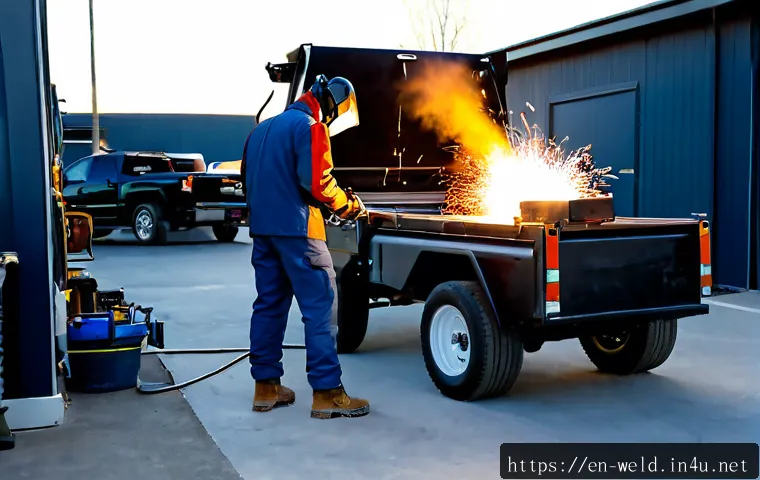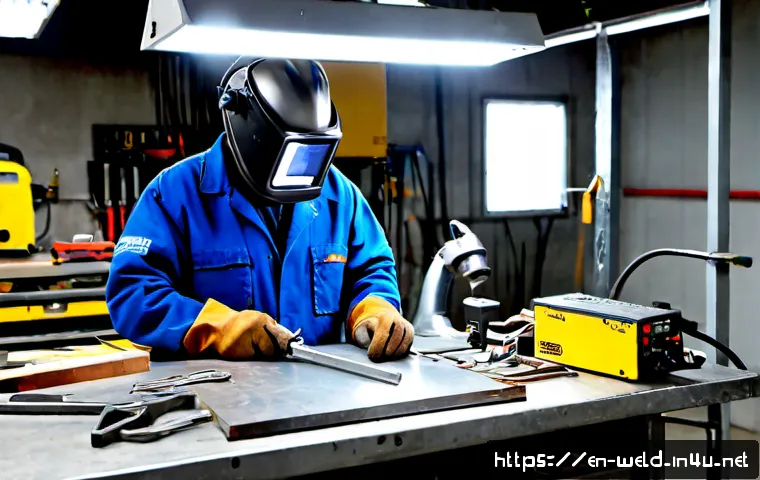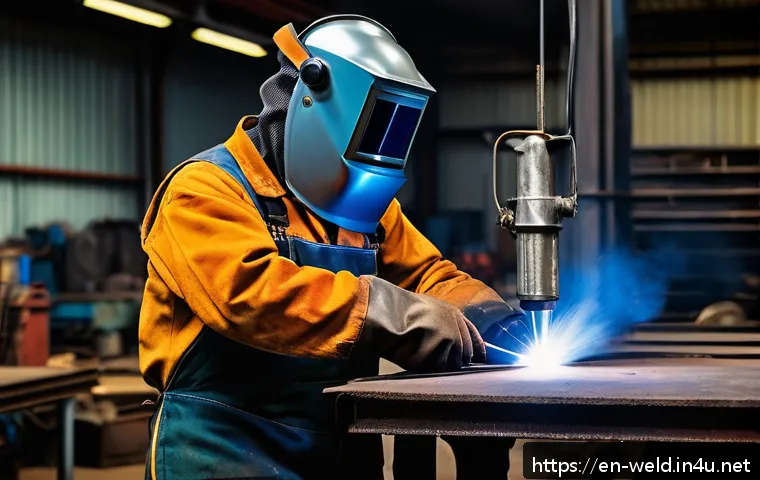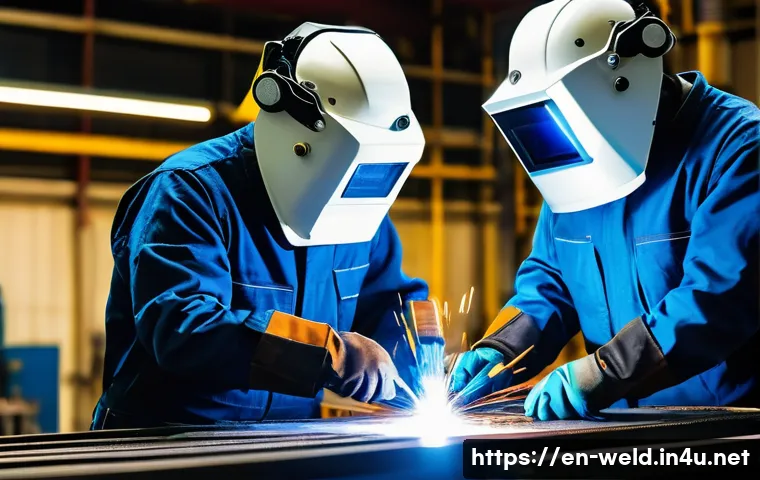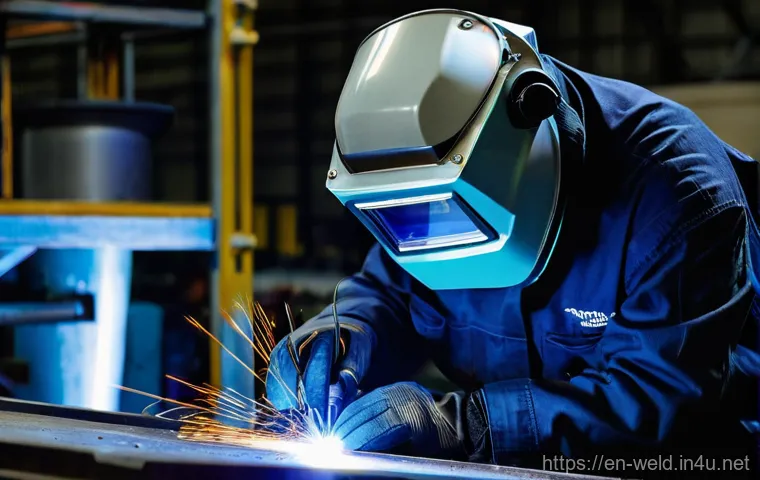
Hey fellow metal maestros! How many of you, like me, started in this incredible trade with just a basic torch and a dream? It’s funny, sometimes we get so caught up in the sparks and the grind that we forget to look up and plan for what’s next.
I’ve personally felt that itch, that burning desire to not just *do* the job, but to *master* it, to really forge a path that goes beyond the everyday.
With all the amazing technological shifts happening around us – from advanced robotics streamlining production to groundbreaking new materials demanding specialized techniques – standing still just isn’t an option anymore if you want to stay ahead.
This isn’t just about snagging a better paycheck, though that’s certainly a perk; it’s about pushing your craft, ensuring your skills are future-proof, and feeling that undeniable pride when you know you’re at the absolute top of your game.
I mean, who wants to be left behind when the industry is practically screaming for highly skilled, innovative welders who bring something unique to the table?
That’s exactly why I want to share some game-changing insights and actionable tips that I’ve picked up over the years, and seen countless successful welders implement.
It’s all about investing in yourself, sharpening your edge, and making sure your career trajectory is as strong as your best welds. So, if you’re ready to stop just doing the job and start building an epic career, you’re in the right place!
Let’s uncover the secrets to continuous growth and success in the welding world, right here.
Mastering the Art of Specialization

Finding Your Niche in the Fiery World
I’ve seen it time and again, fellow welders, how easy it is to fall into the trap of being a “jack of all trades, master of none.” When I first picked up a torch, I wanted to do it all – structural steel, delicate TIG, even some artistic metalwork.
I thought being versatile was the key to success. But as I gained more experience, I realized the real game-changer wasn’t about doing a little bit of everything; it was about diving deep into a specific area and becoming *the* go-to expert.
Think about it: if a client needs a super-specific, high-pressure pipeline weld, they’re not looking for someone who “can probably do it.” They’re looking for the person whose reputation precedes them, the one everyone points to when that particular challenge arises.
Specializing means you can command higher rates, get more challenging and interesting projects, and honestly, you gain a level of self-satisfaction that general work just doesn’t provide.
It truly elevates your craft from a job to an art form.
The Path to Becoming an Industry Icon
So, how do you even begin to narrow down your focus? For me, it started by really paying attention to what kind of welding sparked my passion and challenged me the most.
Was it the intricate precision of aerospace components? The robust, heavy-duty demands of marine fabrication? Or perhaps the exacting standards of medical device welding?
Once you identify that area, it’s about relentless pursuit of knowledge and skill. This isn’t just about taking another basic course; it’s about seeking out advanced workshops, specialized certifications, and mentorship from true masters in that niche.
I remember spending a fortune and countless hours on an advanced orbital welding certification, and initially, I wondered if it was worth it. But then the jobs started rolling in – projects I never would have qualified for before – and the investment paid itself back tenfold.
Becoming an icon in your chosen niche isn’t just about technical skill; it’s about continuously learning, experimenting, and even developing new techniques.
It’s about becoming synonymous with excellence in your chosen field.
Embracing the Cutting Edge: Technology in Your Torch Hand
Integrating Robotics and Automation
Let’s be real, the world of welding isn’t just about brute force and sparks anymore. It’s evolving faster than ever, and if you’re not keeping up, you’re going to get left behind.
I’ve seen firsthand how robotics and automation are transforming workshops, from massive industrial plants to smaller custom fabrication shops. Now, before you start thinking these robots are coming for your job, hear me out.
For us skilled welders, understanding and even *programming* these machines opens up a whole new world of opportunities. It’s not about being replaced; it’s about upgrading your role.
I remember visiting a friend’s facility where they implemented a robotic welding arm. Instead of fearing it, the welders there learned to set it up for repetitive tasks, freeing them up to focus on the intricate, high-skill, custom work that robots just can’t replicate.
This transition made their jobs more interesting and less physically demanding, proving that technology can be a powerful ally.
Navigating Advanced Materials and Techniques
The materials we work with are also constantly changing. Gone are the days when it was mostly mild steel and a bit of stainless. Now we’re dealing with exotic alloys, composites, and even specialized plastics that require incredibly precise and often brand-new welding or joining techniques.
I vividly recall the first time I had to work with a super-duplex stainless steel for an offshore project; my usual settings and techniques just weren’t cutting it.
It forced me to dive deep into material science, understand intermetallic precipitation, and adjust my parameters in ways I never thought possible. This push forced me to expand my knowledge base significantly.
Continuous learning here isn’t a suggestion; it’s a necessity. Being proficient in these advanced materials and techniques not only makes you more valuable but also positions you at the forefront of the industry.
It means you’re not just following trends; you’re setting them, and that’s a pretty powerful feeling.
Beyond the Beads: Cultivating Leadership and Business Acumen
Stepping Up as a Team Leader or Foreman
You know, for years, my focus was purely on the perfect bead, the strongest joint. I thought my worth was entirely in my hands-on skill. But then opportunities started popping up – leading a small team on a complex project, acting as a foreman, or even just mentoring the new apprentices.
And let me tell you, those roles require a completely different skillset than simply laying down a great weld. Suddenly, it wasn’t just about my work; it was about coordinating a crew, managing timelines, ensuring safety, and problem-solving on a larger scale.
I remember feeling a bit out of my depth initially, but I quickly realized that my welding expertise gave me a unique perspective. I understood the challenges my team faced because I lived them.
Cultivating leadership skills – like effective communication, delegation, and conflict resolution – transformed my career trajectory and opened doors I never imagined.
It’s a natural evolution for many seasoned welders, and it’s incredibly rewarding to guide others while still being connected to the craft.
Understanding the Business Side of Welding
Let’s talk money, profit, and project management. Most of us start out focused solely on the technical aspects, but if you want to climb the ladder or even run your own show someday, you *have* to understand the business side.
This means grasping concepts like budgeting, bidding on jobs, managing supply chains, and even client relations. I once took on a side project for a friend without properly estimating the material costs and labor time, and let’s just say I learned a very expensive lesson that day.
It wasn’t about my welding being bad; it was about my business acumen being nonexistent. Learning how to accurately quote jobs, manage overheads, and negotiate contracts transformed my approach to my work, even when I was still an employee.
Knowing how your work fits into the larger financial picture makes you an invaluable asset to any company, and it’s absolutely essential if you ever dream of being your own boss.
The Power of the Network: Who You Know Matters
Building Meaningful Industry Connections
You might think welding is a solitary pursuit, just you and your torch, but that couldn’t be further from the truth. In my journey, some of the biggest leaps in my career came not just from what I knew, but from *who* I knew.
Attending industry trade shows, joining local welding associations, and even just striking up conversations with other welders at supply shops can open up incredible opportunities.
I remember bumping into an old mentor at a fabrication expo; one casual chat led to an introduction to a company that was doing cutting-edge work in a niche I was just getting into.
That connection directly landed me my most challenging and rewarding project to date. These aren’t just about collecting business cards; it’s about building genuine relationships, sharing knowledge, and supporting each other.
A strong network provides invaluable insights, job leads, and mentorship that you simply can’t find by staying isolated in your bay.
Finding and Being a Mentor
Mentorship is a two-way street, and it’s something I absolutely swear by. Early in my career, I was incredibly lucky to have a seasoned welder take me under his wing.
He taught me techniques no textbook could, showed me shortcuts that saved hours, and, more importantly, instilled in me the discipline and pride in my work that I carry to this day.
Having someone to bounce ideas off of, ask “dumb” questions to, and learn from their mistakes without having to make them yourself is priceless. But it’s not just about finding a mentor; it’s about *being* one too.
As I’ve gained experience, I’ve made it a point to pay that forward. Guiding newer welders not only reinforces my own knowledge but also builds incredible rapport and trust within the community.
It creates a cycle of learning and improvement that benefits everyone, solidifying your reputation as an expert and a leader in the field.
Continuous Certification: Sharpening Your Edge
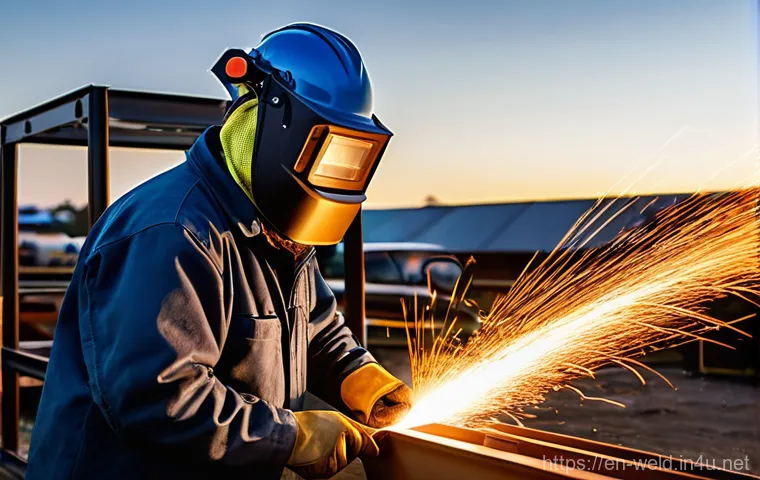
Investing in Advanced Welding Certifications
If you’re serious about being at the top of your game, continuous learning and certifications are non-negotiable. I mean, think about it: technology, materials, and safety standards are constantly evolving.
What was state-of-the-art five years ago might be old news today. Investing in advanced certifications isn’t just about adding another piece of paper to your wall; it’s about proving you have the most current, in-demand skills.
I’ve seen countless times how a specific certification, like an AWS D1.1 for structural steel or an API 1104 for pipeline welding, can immediately open doors to higher-paying jobs and more complex projects.
It tells employers and clients that you’re not just skilled, but that your skills are validated by industry standards. It’s a commitment to excellence that pays dividends throughout your entire career.
It really shows your dedication and makes you stand out in a competitive job market.
Exploring Different Certification Paths
The beauty of the welding world is the sheer variety of paths you can take with certifications. It’s not a one-size-fits-all situation, and choosing the right ones depends heavily on your career goals and chosen niche.
Do you want to work on critical infrastructure? Then certain ASME or API certifications will be crucial. Are you aiming for aerospace?
NADCAP accreditation might be your target. Or perhaps you’re looking into inspection roles? The CWI (Certified Welding Inspector) is practically a golden ticket.
I remember researching all these options and feeling a bit overwhelmed, but taking the time to understand each one, what it covered, and where it could lead me, was incredibly empowering.
Here’s a quick overview of some common advanced certifications that can really boost your career:
| Certification Body/Type | Focus Area | Key Benefits for Welders | Typical Time/Cost (Estimate USD) |
|---|---|---|---|
| AWS Certified Welder (CWI) | Welding Inspection, Quality Control | Opens doors to inspection roles, higher pay, leadership. | 1-2 weeks/ $1,500 – $3,000+ |
| API 1104 (Pipeline Welding) | Pipeline Construction & Repair | Required for pipeline jobs, high demand, excellent pay. | Variable/ $500 – $1,500+ per qualification |
| ASME Section IX (Boilers & Pressure Vessels) | High-Pressure Systems, Critical Fabrication | Mandatory for specific industries, demonstrates precision. | Variable/ $500 – $1,500+ per qualification |
| AWS D1.1 (Structural Steel) | Building & Bridge Construction | Industry standard for structural work, broad applicability. | Variable/ $300 – $1,000+ per qualification |
| NADCAP (Aerospace) | Aerospace Welding & Fabrication | Access to high-tech, precision aerospace industry roles. | Company-specific/ Varies |
Forging Your Own Path: The Entrepreneurial Welder
Starting Your Own Welding Business
For many of us, the dream of being our own boss, of calling the shots and seeing our vision come to life, is incredibly compelling. I know it was for me.
After years of working for others, the idea of having my own shop, setting my own hours, and building something from the ground up felt like the ultimate mastery of my craft.
Starting a welding business isn’t for the faint of heart, though. It’s not just about being a great welder; it’s about being a businessman, a marketer, an accountant, and a customer service representative all rolled into one.
I remember the sleepless nights figuring out my first business plan, researching insurance, and even just picking out the right location for my mobile rig.
But let me tell you, that first successful job I landed on my own, seeing my company’s name on the invoice – there’s no feeling quite like it. It’s challenging, yes, but the freedom and direct reward for your hard work are absolutely incomparable.
Exploring Freelance and Consulting Opportunities
If running a full-blown welding shop feels a bit too daunting, or if you prefer more flexibility, there’s a fantastic middle ground: freelance welding and consulting.
This path allows you to leverage your expertise without the massive overhead of a physical shop. Many companies, especially smaller ones or those with highly specialized needs, often prefer to bring in an experienced freelance welder for specific projects rather than hiring a full-time employee.
I’ve done a fair bit of freelance work myself, traveling to different sites, tackling unique challenges, and building an incredible network along the way.
Even beyond the torch, if you’ve developed significant expertise in a niche, you can offer consulting services. Imagine advising on welding procedures, material selection, or even quality control for other businesses.
Your years of hands-on experience become an invaluable commodity, offering a different, equally rewarding avenue for career growth and significant earning potential.
Paying it Forward: Mentoring the Next Generation of Metal Maestros
The Importance of Passing Down Knowledge
You know, looking back at my career, some of my proudest moments aren’t about the biggest projects or the toughest welds I conquered. They’re about the times I saw a spark ignite in a new apprentice’s eyes when something finally clicked for them.
We stand on the shoulders of giants in this trade, don’t we? Every technique, every safety lesson, every trick of the trade was learned and passed down.
There’s a profound responsibility, I believe, for seasoned welders like us to pay it forward. It’s not just about teaching someone how to hold a stinger; it’s about instilling that passion, that commitment to quality, and that unwavering focus on safety.
I vividly remember the patience my own mentors showed me, even when I made the same mistake five times in a row. That kind of guidance is irreplaceable, and it’s essential for ensuring the future of our incredible profession.
It’s how we keep the craft alive and thriving for decades to come.
Building a Legacy Through Guidance and Support
Mentoring isn’t just about sharing technical skills; it’s about building a legacy. It’s about shaping the character and professionalism of the next generation of welders.
When you take an apprentice under your wing, you’re not just teaching them to weld; you’re showing them how to approach challenges, how to communicate effectively, how to take pride in their work, and how to navigate the ups and downs of a demanding career.
I’ve had the immense satisfaction of watching young welders I mentored grow into highly skilled professionals, some even becoming foremen or starting their own businesses.
Seeing their success, knowing you played a small part in their journey, is an incredibly fulfilling experience. It reinforces your own knowledge, challenges you to articulate complex concepts clearly, and solidifies your position as a respected authority in the welding community.
Ultimately, it’s about investing in the future of our trade, one spark at a time.
Wrapping Things Up
So, there you have it, fellow metal artisans. Our journey through the world of welding is anything but stagnant; it’s a dynamic, ever-evolving path that rewards dedication, continuous learning, and a dash of entrepreneurial spirit.
From the moment we strike our first arc to becoming an industry leader or a specialized guru, every step is an opportunity to hone our craft and expand our horizons.
Remember, the true mastery of welding isn’t just about the perfect bead, but about forging a career that truly resonates with your passion and ambition, creating a legacy with every spark.
Handy Tips You Won’t Want to Miss
1. Always seek out your niche! Trying to be good at everything often means you’re great at nothing. Identify what truly excites you, whether it’s aerospace TIG or heavy structural, and then pour your heart into becoming the undeniable expert in that specific domain. This focus will set you apart, command higher rates, and bring immense satisfaction to your work, transforming a job into a true calling.
2. Embrace technology, don’t shy away from it. Robotics and advanced welding processes are here to stay, and learning to integrate them into your workflow, or even program them, is a huge advantage. It frees you up for more complex, creative tasks and boosts your efficiency in ways you can’t imagine, making you an invaluable asset in any modern fabrication environment.
3. Get savvy with the business side of things, no matter your role. Understanding project bids, material costs, client relations, and even basic marketing will make you an invaluable asset to any team, or lay the groundwork for you to successfully launch your own venture someday. It’s not just about the sparks; it’s about the spreadsheets and strategic thinking too, ensuring your skills are financially rewarded.
4. Network, network, network! Seriously, some of the best opportunities I’ve ever encountered came from a casual conversation at a trade show or a connection made through an industry association. Your professional community is a goldmine of knowledge, mentorship, and potential job leads – don’t isolate yourself. Active participation can open doors you never knew existed, enriching your career far beyond technical skills.
5. Never stop learning or certifying. The welding world is constantly innovating, and staying current with advanced materials, techniques, and certifications isn’t just a suggestion, it’s a necessity. These credentials are your undeniable proof of expertise and a direct pathway to higher-paying, more interesting projects, constantly sharpening your edge in a competitive and dynamic field.
Key Takeaways to Torch Your Career Forward
Ultimately, success in welding, whether you’re at the bench or running the show, boils down to a few core principles: find your passion and specialize fiercely, welcome technological advancements as allies, cultivate a robust professional network, and commit to lifelong learning through continuous certifications.
These aren’t just tips; they’re the foundational pillars for building a truly exceptional, resilient, and financially rewarding career in this incredible trade, ensuring your journey is as bright as your hottest arc.
Frequently Asked Questions (FAQ) 📖
Q: With all the rapid advancements in welding technology and new materials constantly hitting the market, how do you personally stay on top of your game and keep your skills from becoming outdated?
A: Oh, this is a question I get asked all the time, and honestly, it’s one I wrestled with myself for years! It feels like just yesterday I was learning the ropes with stick welding, and now we’re talking about laser welding and exotic alloys.
My biggest piece of advice, and something I’ve personally found invaluable, is to embrace continuous learning as part of your core welding philosophy.
Think of it like this: your tools need sharpening, and so do your skills. I’ve found that actively seeking out workshops, even short online courses, on things like advanced TIG techniques for aluminum or understanding the properties of new high-strength steels, makes a huge difference.
Don’t wait for your employer to send you; take the initiative! I also make it a point to follow industry publications and even some of the more technical YouTube channels – yes, even after all these years, I still learn new tricks!
And here’s a golden nugget: connect with other welders. I’ve learned some of my most practical tips just by chatting with folks at supply shops or local trade events.
Sharing experiences and problems is like a free, accelerated learning course. It’s not just about what you know but also about staying curious and always being ready to add another tool to your mental toolbox.
That willingness to adapt? That’s what truly sets you apart.
Q: It’s easy to get stuck in a rut, just going through the motions. What’s the real secret, in your experience, to transforming a good welding job into an absolutely epic career that you’re truly proud of?
A: You hit the nail on the head – “going through the motions” is the career killer! I’ve been there, staring at a stack of work orders, feeling like just another cog in the machine.
But here’s what I learned, and what truly changed my trajectory: it’s not just about doing the welding; it’s about becoming an indispensable problem-solver and a true artisan.
For me, that meant specializing. Instead of trying to be decent at everything, I honed in on areas that fascinated me and were clearly high-demand, like pipe welding for critical infrastructure or custom fabrication for high-end architectural projects.
Getting those specialized certifications felt like unlocking new levels in a game, opening doors to more complex, more rewarding, and let’s be honest, better-paying work.
Another game-changer was shifting my mindset from “just a welder” to “a leader in my craft.” This meant taking ownership of projects, thinking about efficiency and quality from a broader perspective, and even mentoring newer welders.
That sense of pride you get when you see a complex project you led come to life? There’s nothing like it. It stops being just a job and starts feeling like you’re truly building something significant, leaving your mark on the world, one perfect weld at a time.
Q: With all the buzz about automation and robotics in welding, it can feel a little daunting. How can I, as a hands-on welder, make sure I stay relevant and not get pushed out by machines?
A: I totally get that feeling, believe me! When I first started seeing those robotic welding arms whirring away, there was a tiny part of me that worried about what it meant for us traditional welders.
But what I’ve come to realize, and what I want to impress upon you, is that automation isn’t about replacing all of us, but rather about changing how we work and creating new opportunities.
The trick is to understand that these robots need people to program them, maintain them, and handle all the intricate, custom, and on-the-fly work they simply can’t do.
My advice? Don’t fear the robots; learn to work with them. If you have the chance, get some exposure to automated systems.
Understanding the basics of programming or even just how they operate can make you incredibly valuable to shops that are integrating this tech. Furthermore, lean into the areas where human skill truly shines: precision work on unique pieces, repair jobs that require a nuanced touch, artistic fabrication, or working with highly specialized materials that demand an experienced hand.
I’ve found that by focusing on those unique, intricate tasks that machines can’t replicate – those complex, one-off challenges – you secure your place as an essential part of the team.
It’s about leveraging technology to make you more efficient, not obsolete, and becoming the go-to person for jobs that require that irreplaceable human touch.